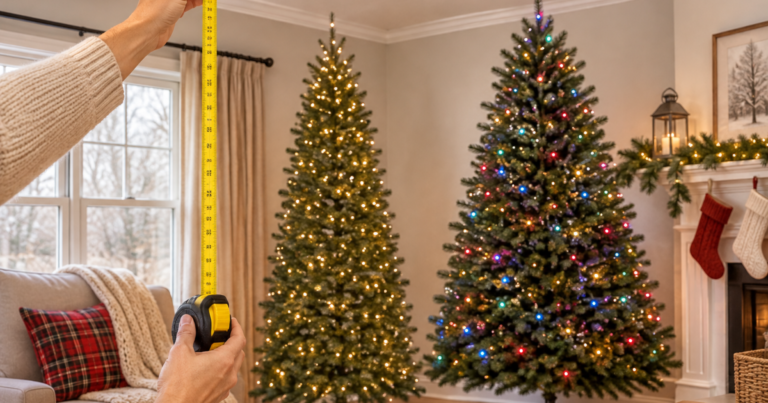

Choosing a pre-lit vs unlit artificial tree is really a choice between convenience now and control later. One gives you a faster path to that first magical glow; the other lets you decide the exact light color, density, and replacement plan every season. The right answer depends less on which option is “better” in the abstract and more on your room, patience, storage space, decorating habits, and how much you enjoy the light-stringing ritual.
The big picture
For most households, a pre-lit artificial Christmas tree is the more convenient choice because the lights are already distributed through the branches, setup is faster, and the tree tends to look finished sooner. An unlit artificial tree is better for decorators who want maximum flexibility, who like changing light styles, or who prefer to replace light strings independently rather than work around a built-in lighting system.
Think of the decision in terms of annual effort. A pre-lit tree asks you to commit to a built-in lighting look. An unlit tree asks you to spend time creating that look yourself. Neither is automatically more stylish; each simply puts the work in a different place.
Side-by-side decision matrix
Use this comparison as a practical filter before falling for a gorgeous product photo. A Christmas tree can be beautiful online and still be wrong for your ceiling height, plug access, storage closet, or decorating temperament.
- Setup speed: Pre-lit trees usually win. Once the sections are connected and the branches are shaped, the light layer is already in place. Unlit trees require a separate lighting step before ornaments can begin.
- Upfront cost: Unlit trees are often simpler products because they do not include integrated lights, but the final cost depends on the tree and the separate light strings you choose. Pre-lit models typically build the lighting into the purchase.
- Long-term maintenance: Unlit trees are easier to refresh because light strings can be replaced separately. Pre-lit trees may require troubleshooting a dark section, checking connections, or working with the original lighting system.
- Light replacement: Unlit trees give you the cleanest replacement path: remove the old string and add a new one. Pre-lit trees can be repaired in many cases, but the process depends on the design and the problem.
- Styling flexibility: Unlit trees offer more freedom if you like switching between warm white, multicolor, twinkle, oversized bulbs, or layered lighting. Pre-lit trees work best when you already know the light mood you want.
- Storage: Pre-lit trees may need a little more care during takedown because light wires remain attached to the branches. Unlit trees avoid built-in wiring but add separate light strings to store.
- Best fit: Pre-lit trees suit busy decorators, families, and anyone who wants the centerpiece ready faster. Unlit trees suit hands-on decorators, frequent style changers, and people who want simpler light replacement.
Cost is more than the price tag
The easiest mistake is comparing only the tree purchase. With an unlit artificial tree, you also need to account for light strings, spare bulbs if applicable, extension placement, and the time spent wrapping branches evenly. With a pre-lit tree, the lights are part of the tree’s value, but you are also buying into that lighting system for future seasons.
A fair cost comparison should include three things: the tree, the lights, and the ownership experience. If you dislike wrestling with cords every year, the time saved by a pre-lit model may be worth more than a small difference in purchase price. If you enjoy refining the tree’s glow and already own quality lights, an unlit tree can feel more economical and more creative.
Also consider how often your holiday style changes. A household that decorates with the same warm white look every year may get excellent value from a pre-lit tree. A decorator who alternates between nostalgic multicolor, crisp white, and novelty lighting will get more mileage from an unlit tree because the light layer can change without replacing the tree itself.
Setup: speed, patience, and plug reality
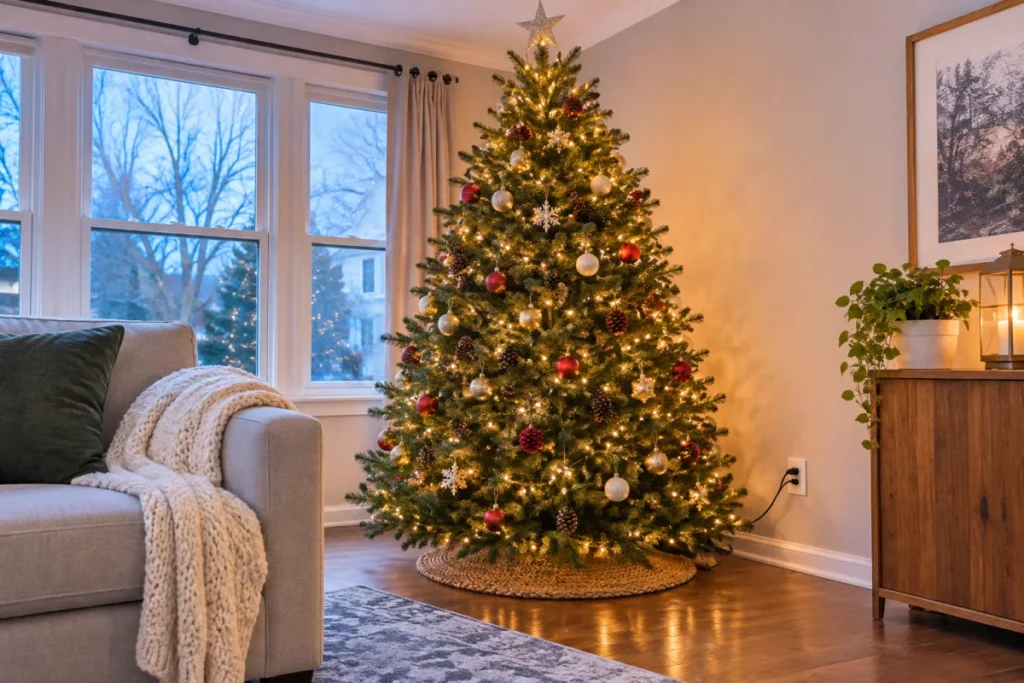
Pre-lit trees remove the most fiddly part of decorating: getting lights around the tree in a way that looks even from the sofa, the entryway, and the dining table. That matters most when the tree is tall, full, or placed where the back is hard to reach. A 7.5 ft full tree in a corner can be surprisingly awkward once you are looping lights behind it.
Before buying either type, measure more than ceiling height. Check the floor space, maximum branch diameter, doorway clearance, and the path people use around the tree. If the tree is going near a cabinet, sofa, fireplace surround, or picture window, a few inches can change the whole room. For a more precise room-fit routine, use this guide to measure your room before buying a Christmas tree.
Pre-lit setup is not zero effort. You still need to assemble sections, connect any required plugs or poles, shape the branches, and test the lights before decorating. The difference is that the light placement is already designed into the tree, so the first glow arrives sooner. On a busy December evening, that can feel like a small holiday miracle.
Unlit setup takes longer, but it gives you control. You can place more lights near the trunk for depth, keep the outer tips softer, or use a denser wrap on the side visible from the room. If your idea of a perfect tree includes adjusting the sparkle one branch at a time, the extra work may be part of the pleasure rather than a drawback.
Style: built-in polish or creative freedom?
A pre-lit tree tends to give a cleaner, more consistent lighting base. Because the lights are already arranged through the branches, the tree can look balanced before a single ornament goes on. This is helpful if you like a polished, coordinated look with ribbon, glass ornaments, a collar, and a topper that all need the lighting to behave quietly in the background.
Pre-lit models also make sense when the light style is central to the tree’s personality. A tree such as the Balsam Hill BH Fraser Fir Flip Tree Color + Clear LED is a useful reference point for shoppers who want to compare a built-in color-and-clear lighting approach rather than starting from a bare tree and adding separate strings.
Unlit artificial trees are the more adaptable canvas. They suit layered decorating, period-inspired themes, and households that treat the tree as a fresh design project each season. You can use warm white one year, multicolor the next, or combine different bulb sizes if the tree shape supports it. You can also change your light density: soft and sparse for a woodland look, brighter and fuller for a family-room centerpiece.
The trade-off is consistency. Hand-strung lights can look wonderful, but they depend on time, care, and patience. Uneven spacing becomes more visible once ornaments and ribbon go on. If you know you rush the lighting step, a pre-lit tree may give you a more reliable finished look.
Maintenance and light failure: the honest trade-off
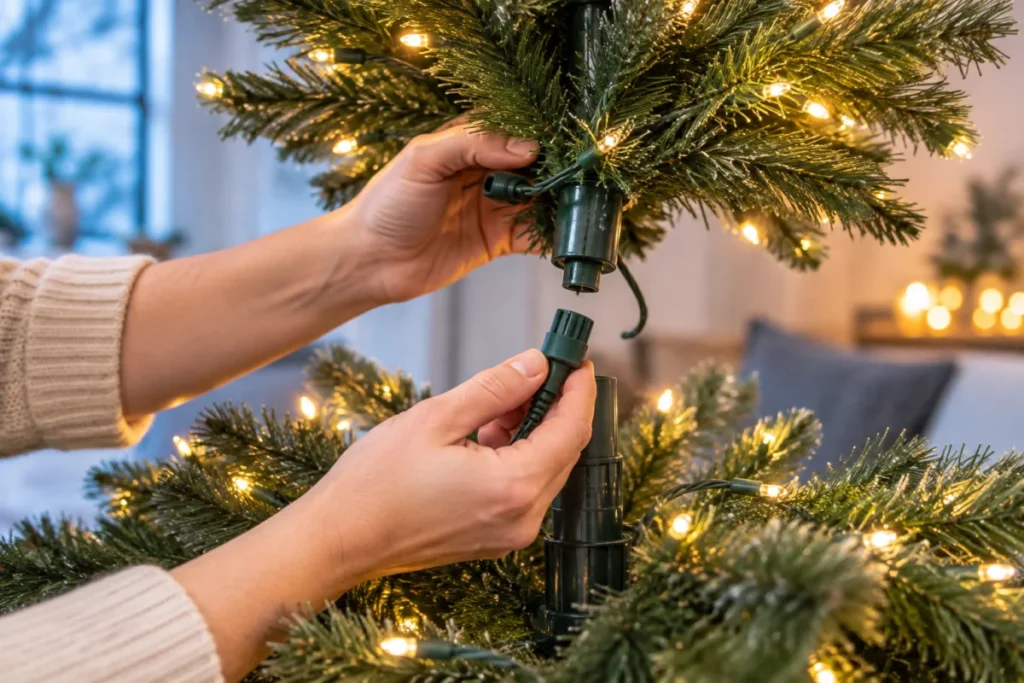
Light issues are the main reason some shoppers hesitate over pre-lit trees. The concern is understandable: if the lights are built in, a dark section feels more consequential than replacing one loose strand on an unlit tree. Still, the practical answer is not to avoid pre-lit trees automatically. It is to buy with realistic expectations and know how much troubleshooting you are willing to do.
With pre-lit trees, check how the sections connect, whether the tree uses a quick-connect style, what the light color options are, and what the retailer or manufacturer says about replacement parts or support. Do not assume every pre-lit tree uses the same wiring approach. A National Tree Company 7.5 ft Pre-Lit Dunhill Fir Tree with PowerConnect Dual Color LED Lights, a Twinkly Pre-lit Tree Multicolor + White / 7 ft / Type A, and a traditional warm-white slim tree are not interchangeable experiences just because they all arrive with lights installed.
With unlit trees, the maintenance advantage is modularity. If a strand fails, you remove that strand and replace it. The tree itself is not tied to the light failure in the same way. The downside is that you are responsible for storing, untangling, testing, and restringing those lights each year.
If you already have a pre-lit tree and a section goes dark after assembly, follow a step-by-step check before assuming the tree is done for the season. This guide to fixing pre-lit tree lights after setup walks through sensible first checks without turning the whole evening into a repair drama.
Which tree suits your decorating style?
Choose pre-lit if you want a smoother annual routine
Pre-lit is the better fit when the goal is a beautiful tree with less setup friction. It suits households that decorate after work, families with children eager to start ornaments, and anyone who wants the tree to glow before the ornament boxes are even fully open. It also suits rooms where access around the tree is limited, because hand-stringing lights behind a full tree can be awkward.
It is also the stronger choice when you already know your preferred mood: warm white and classic, dual-color and flexible, or multicolor and playful. If your holiday look stays fairly consistent, built-in lights can make the whole routine feel more settled.
Choose unlit if lighting is part of your creative ritual
Unlit is the better fit if you enjoy control. It lets you choose the exact bulb style, color temperature, spacing, brightness level, and arrangement. It is also sensible for decorators who want to replace lights independently or who prefer not to rely on a built-in system over many seasons.
Unlit trees can be especially satisfying if you own quality lights already or like building depth with trunk lighting and outer-branch sparkle. The tree becomes a framework rather than a finished lighting plan.
Mistakes that lead to buyer regret
- Buying for height alone: A 7.5 ft tree can still feel too large if the diameter blocks a walkway. Check width and placement before falling for height.
- Ignoring light tone: Warm white, clear, multicolor, and dual-color lights create very different moods. Pick the mood before you pick the tree.
- Underestimating setup time: Unlit trees need a lighting session before decorating begins. If that step annoys you, do not romanticize it.
- Assuming pre-lit means maintenance-free: Built-in lights are convenient, not magic. Test them before adding ornaments and keep instructions or support details handy.
- Forgetting storage: Pre-lit branches need careful packing around wires. Unlit trees need separate light storage that prevents tangles and damaged bulbs.
- Choosing style over routine: A dramatic tree is only a joy if you can realistically assemble, decorate, and store it every year.
Fast answers
Is a pre-lit Christmas tree better than an unlit artificial tree for most households?
Yes, for most households a pre-lit Christmas tree is the more practical choice because it reduces setup time, creates a ready-made lighting base, and removes the annual job of stringing lights evenly. An unlit artificial tree is better when styling flexibility, easier light replacement, or changing the light look from year to year is more important than convenience.
Does an unlit tree last longer?
Not automatically. Tree longevity depends on construction, storage, handling, and the quality of the branches and stand. The advantage of an unlit tree is that its lights are separate, so a failed strand does not affect the tree itself.
Can a pre-lit tree still be restyled?
Yes. You can change ornaments, ribbon, picks, tree collars, toppers, and overall color palette. The built-in light style is the part that remains relatively fixed unless the tree has multiple light options.
Is pre-lit worth it for a slim or pencil tree?
Often, yes. Slim and pencil trees are usually bought for tight spaces, corners, hallways, apartments, and secondary rooms. Built-in lights help keep the profile tidy and reduce visible cord clutter.
The sensible recommendation
Pick a pre-lit artificial tree if you want the holiday centerpiece up faster, prefer a consistent glow, and do not want light-stringing to become the annual bottleneck. For many homes, that is the calmer and more satisfying choice: assemble, fluff, test, decorate, and enjoy the room.
Pick an unlit artificial tree if your lighting taste changes often, you enjoy the hands-on decorating process, or you want the simplest possible path for replacing light strings over time. It asks for more effort each season, but it gives you the broadest creative control.
The best decision is the one that matches both the room and the routine. Measure first, decide the light mood second, then choose the tree shape and setup style that will still feel manageable when the calendar gets crowded and the ornament boxes come out.