A pre-lit tree can be gorgeous in the box and still feel wrong if it crowds the ceiling, blocks a walkway, or disappears into a deep corner. Before you fall for a silhouette or light style, measure for a Christmas tree with three numbers: usable ceiling height, corner depth, and walkway clearance. Those measurements turn a dreamy holiday idea into a tree that feels generous, not jammed.
The short version
For a tree that looks intentional, measure the space it will occupy, not just the room it sits in. The best fit leaves breathing room above the topper, enough depth for the full branch spread, and a clear route around nearby furniture.
- Ceiling height: Measure floor to ceiling, then subtract space for the topper, tree stand, and a little visual clearance.
- Corner depth: Measure from the corner outward along both walls, then compare that space with the tree’s listed maximum diameter.
- Walkway clearance: Measure the open walking path after furniture is in place, not in an empty room.
- Tree shape: Full, slim, pencil, and flatback-style placements behave very differently even at the same height.
Start with usable ceiling height, not room height
The label on a Christmas tree tells you the tree height, but your room has to accommodate more than that number. A 7.5 ft tree in an 8 ft room can work in some setups, but only if the stand height, topper choice, and ceiling clearance are modest. If your topper is tall or your tree stand adds noticeable height, the same tree may feel squeezed.
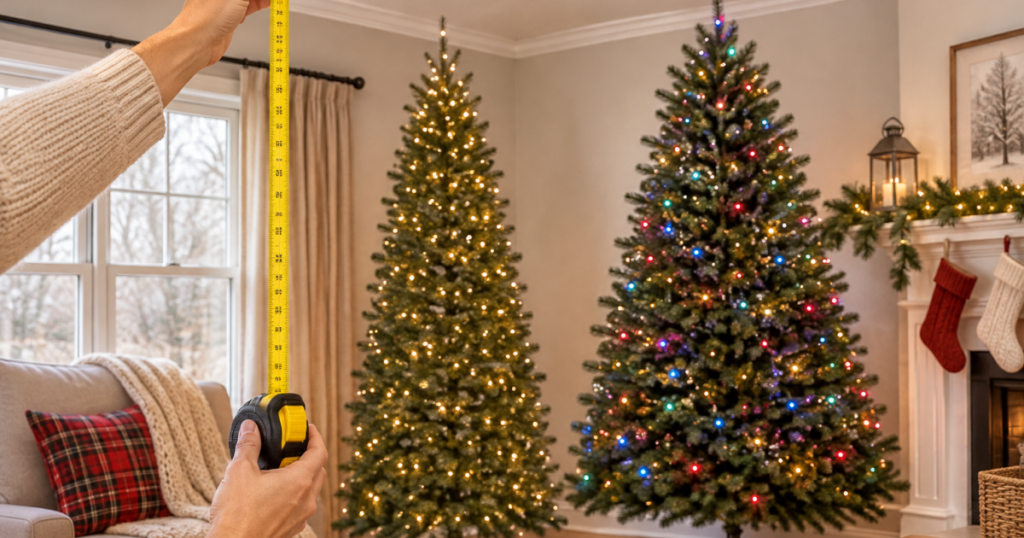
Use a tape measure from the finished floor to the ceiling directly where the tree will stand. Do not rely on the height listed for the whole room if the tree will sit under a beam, soffit, angled ceiling, or low-hanging light fixture.
A simple ceiling-height formula
Use this as a practical starting point: ceiling height minus topper height minus visible clearance equals your comfortable tree height. Many rooms look better with a few inches of open space above the finished tree rather than a topper pressed close to the ceiling.
For example, in an 8 ft room, a 7.5 ft tree leaves about 6 inches before accounting for the topper. That can be lovely with a low bow, star, or no topper, but it may be too tight for a tall statement topper. If you love a dramatic finial or oversized bow, choosing a shorter tree often gives the whole display more polish.
Measure corner depth before trusting the diameter
Tree diameter is usually the widest point of the branch spread, often near the lower third of the tree. The catch is that a corner is not a circle. A tree with a generous diameter needs enough room along both walls and enough open floor space in front, or the lower branches can push into curtains, media cabinets, side tables, or a fireplace surround.
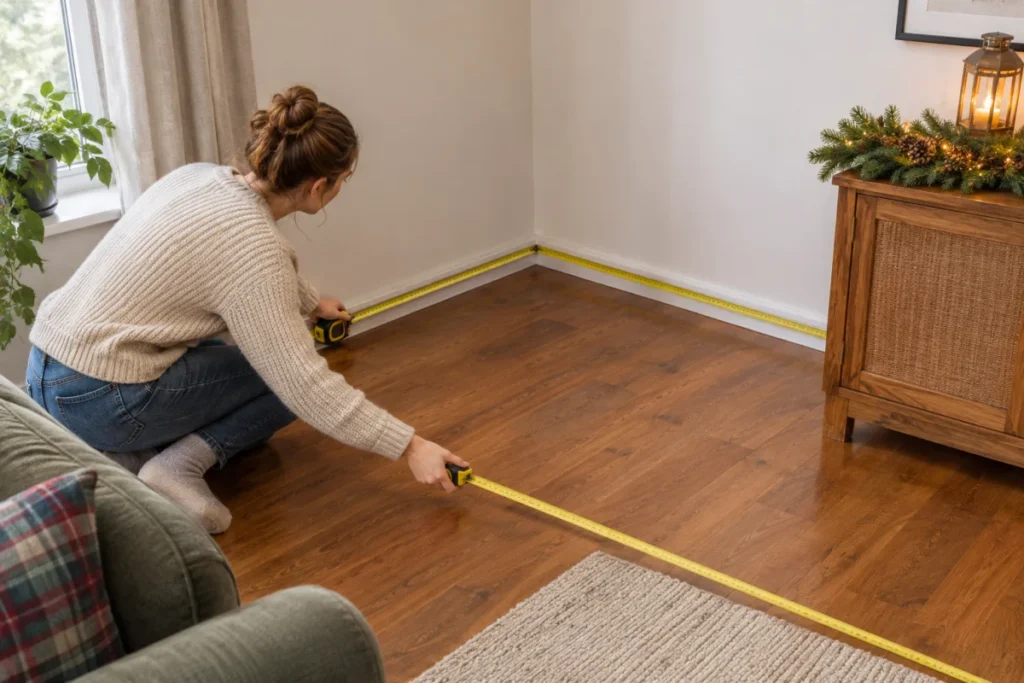
Stand in the intended corner and measure from the corner along the left wall, then along the right wall. Next, measure diagonally or straight out into the room to see how much floor area the tree can claim without making the seating area feel pinched.
If the tree’s maximum diameter is 60 inches, imagine a 5 ft wide footprint at the broadest point. It does not need an empty 5 ft square in every direction, but it does need enough clearance for the front branches to open naturally and for ornaments to hang without being flattened against furniture.
This is where silhouette matters as much as height. A full tree creates a classic, abundant holiday presence, while a slim or pencil shape can bring sparkle to tighter rooms without taking over the floor plan. For more on the mood each outline creates, see how Christmas tree shape changes the feel of a living room.
Check walkway clearance with the room set up normally
The most overlooked measurement is the walking path. A tree that fits on paper can still become annoying if everyone has to edge around it with coffee, gifts, laundry baskets, or a sleepy pet underfoot. Measure the space as the room actually functions during December, with chairs, ottomans, side tables, and gift baskets where they normally land.
As a practical rule, keep the main route through the room comfortably open. If the tree sits near a doorway, hallway, staircase, or sofa arm, measure the narrowest point after the expected branch spread is included. A slim tree in the right spot often feels more festive than a grand tree that turns the room into an obstacle course.
Also remember decorating depth. Ribbon, large ornaments, and branch tips add visual volume even when the measured diameter is accurate. If you favor oversized ornaments or layered ribbon, give yourself extra room in front of the tree so the finished look feels lush rather than compressed.
Match the measurements to the tree shape
Once you measure for a Christmas tree and have the three key numbers, the right shape becomes much easier to spot. Height gives the tree presence, diameter controls the footprint, and walkway clearance decides whether the room still works after the lights are glowing.
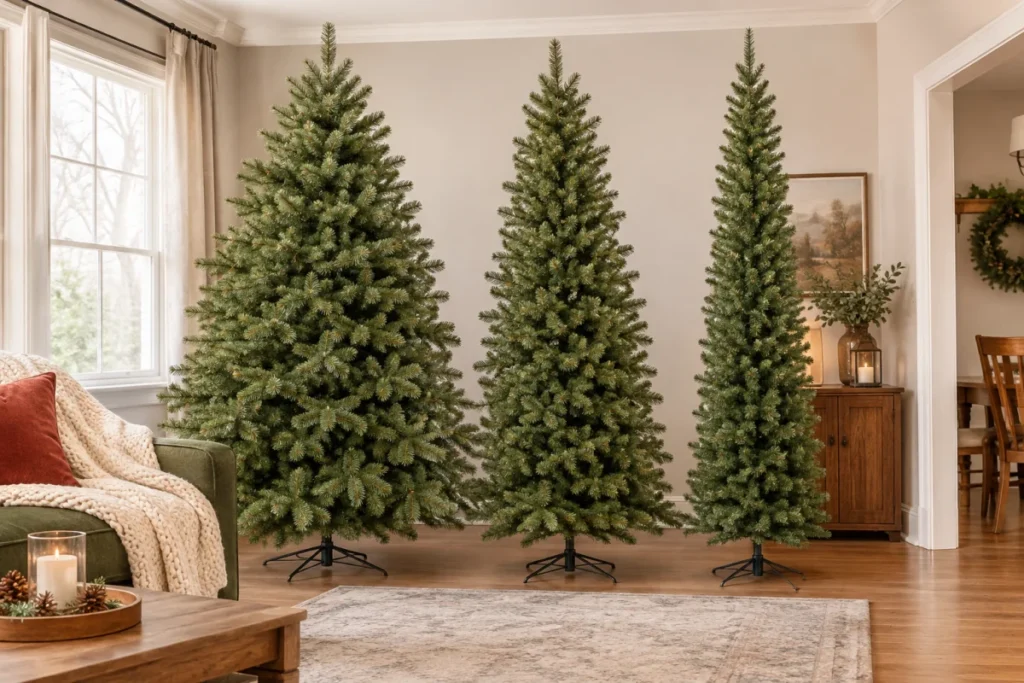
- Full trees: Best when the room has enough open floor area for the lower branches. They suit traditional living rooms, wide picture-window placements, and spaces where the tree is the main seasonal centerpiece.
- Slim trees: A smart choice for corners, apartments, dining rooms, and rooms with several furniture pieces already competing for space.
- Pencil trees: Useful where floor depth is genuinely limited, such as narrow entry spaces or beside a cabinet, but they need thoughtful decorating so they look deliberate rather than undersized.
- Flocked trees: Visually fuller because the snowy finish catches light and softens branch detail. They can feel more substantial even when the footprint is moderate.
If your measurements point toward a narrow footprint, a pencil option such as the National Tree Company 7 ft. Pre-Lit Kingswood Fir Pencil Slim Hinged Tree with Power Connect Dual Color LED Lights is the kind of profile worth comparing against your available depth. The important step is not choosing by height alone; compare the listed width with the exact corner and walkway numbers you measured.
Common measuring mistakes that lead to regret
Most tree-sizing regrets come from one of a few predictable misses. The good news is that they are easy to avoid before you order.
- Forgetting the topper: A tree can technically fit and still leave no room for the finishing piece that makes it feel complete.
- Measuring an empty room: Holiday rooms are rarely empty. Measure with the coffee table, recliner, media console, and seasonal decor in place.
- Ignoring branch spread: Height gets attention, but the maximum diameter is what determines whether the tree crowds the room.
- Buying for the dream corner: Check outlets, furniture, vents, curtains, and door swings before committing to a location.
- Assuming slim means tiny: Slim trees can still feel tall, bright, and festive when scaled well and decorated with intention.
A room-fit checklist before you buy
Before adding a pre-lit tree to your shortlist, write down these numbers and keep them beside the product page. They are simple, but they cut through a lot of holiday guesswork.
- Floor-to-ceiling height at the exact placement spot.
- Topper height, or your best estimate if you already own one.
- Desired open space between topper and ceiling.
- Distance from corner to nearby furniture on both walls.
- Open floor depth from the wall or corner into the room.
- Narrowest walkway measurement after the tree diameter is considered.
- Storage space for the tree sections after the season ends.
Once those numbers are clear, filtering becomes much calmer. The Pre-Lit Tree Finder is a useful next step because it lets you compare tree height, maximum diameter, silhouette, light style, branch mix, flocking, and setup style without starting from scratch every time.
Things readers ask
How much shorter should a Christmas tree be than the ceiling?
There is no universal number, because topper height and stand design change the answer. A good working method is to subtract the topper and a few inches of visual clearance from the ceiling height, then choose a tree that stays within that result.
What if my room can handle the height but not the width?
Choose by diameter first. A slightly narrower tree that leaves the room usable will usually look better than a fuller tree with branches pressed against furniture. Slim and pencil trees are made for this exact problem.
Should I measure before or after choosing a decorating style?
Measure first, then refine the style. If your numbers allow a full shape, you can lean traditional and layered. If the footprint is tight, a slimmer tree with thoughtful ribbon, coordinated ornaments, and a tidy collar can still feel beautifully finished.
Why it matters
The right tree size is not just about avoiding a scrape on the ceiling. It affects how the lights spread through the room, how comfortably people move around the space, how balanced your ornaments look, and how much patience you have left by the time the topper goes on.
A well-scaled tree also protects the parts of the room you still need every day. Branches should not scrape painted walls, bend against window treatments, block heat vents, or make it awkward to reach an outlet. If you host during the holidays, leave enough space for guests to gather near the tree for photos without bumping ornaments or stepping over extension cords.
There is a style benefit, too. When a tree has room to breathe, even a simpler decorating plan looks more intentional. Lights read brighter, ribbon falls more naturally, and special ornaments can hang where they are visible instead of being tucked into crowded side branches. If your measurements force a smaller footprint, lean into that choice with a neat tree collar, a controlled color palette, and ornaments scaled to the branch width. The result can feel polished and festive rather than like a compromise.
Measure once with care, and every choice after that gets easier: full or slim, tall or moderate, flocked or green, color-changing or warm white. That is when the tree starts feeling less like a gamble and more like the centerpiece you meant to bring home.