Buying ornaments for a 7.5-foot pre-lit tree sounds simple until you are standing in front of a half-decorated tree wondering whether it looks charmingly airy or plainly unfinished. The right count depends on the tree’s width, branch fullness, ornament size, and whether you want a relaxed family tree or a ribbon-rich showpiece.
Start with a number range instead of a single magic total. A pre-lit tree already gives you the glow; your ornaments are there to build color, depth, sparkle, and personality without hiding every lit branch.
What to know first
For a standard 7.5-foot pre-lit artificial Christmas tree, plan on about 90 to 120 ornaments for a balanced look, 120 to 150 ornaments for a polished full look, and 150 to 180 or more for a dense designer-style tree. If the tree is slim or pencil-shaped, reduce the count because there is less branch surface to cover.
- Minimal, airy style: about 60 to 90 ornaments on most 7.5-foot trees.
- Balanced everyday style: about 90 to 120 ornaments for a standard-width tree.
- Full, decorated style: about 120 to 150 ornaments, plus ribbon or picks if you use them.
- Very dense or designer style: about 150 to 180+ ornaments, usually with layered sizes and filler pieces.
Think of those numbers as decorating ranges, not rules. A wide tree with deep branches can swallow ornaments quickly, while a narrow apartment-friendly tree may look finished with far fewer. Before you decorate, shape the branches well; a properly opened tree needs fewer ornaments to look intentional. If your branches still look compressed from storage, use this guide to fluff a pre-lit Christmas tree without loosening wires.
Ornament count by tree shape and fullness
The biggest reason ornament counts vary is silhouette. Two trees can both be 7.5 feet tall and still need very different quantities because one may be a narrow pencil tree and the other may have a much broader footprint. When in doubt, look at maximum diameter as carefully as height.
- Pencil tree: 45 to 75 ornaments for balanced coverage; 75 to 100 for a fuller look.
- Slim tree: 60 to 90 ornaments for balanced coverage; 90 to 120 for a fuller look.
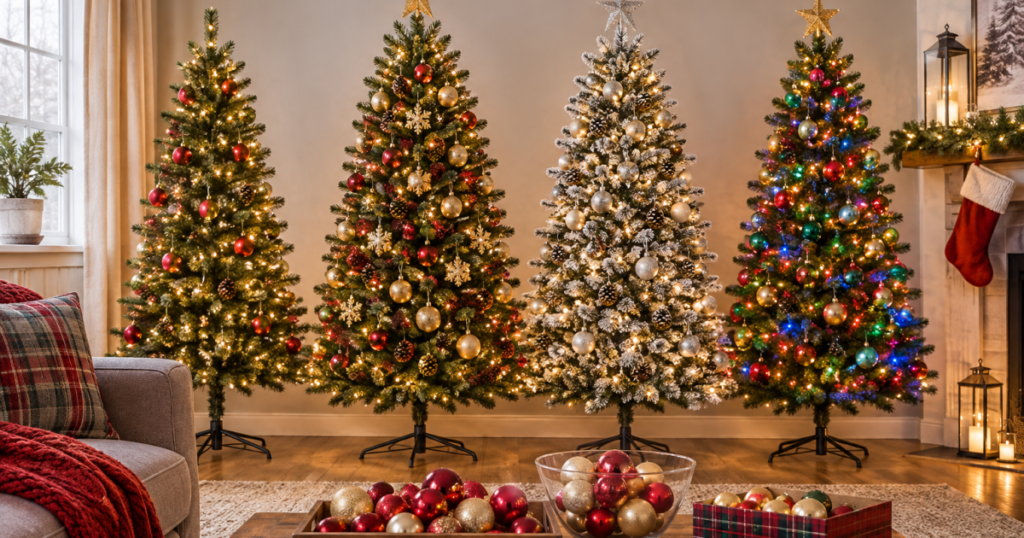
- Standard-width tree: 90 to 120 ornaments for balanced coverage; 120 to 150 for a fuller look.
- Extra-full or wide tree: 120 to 150 ornaments for balanced coverage; 150 to 180+ for a fuller look.
If you are comparing trees before buying decorations, a 7.5-foot listing such as the National Tree Company 7.5 ft Pre-Lit Dunhill Fir Tree with PowerConnect Dual Color LED Lights is a reminder to check height, shape, and width together. The ornament plan should follow the tree’s actual footprint, not just the number on the box.
Adjust the count for ornament size
A 120-piece ornament plan can look sparse or overflowing depending on the diameter of each ornament. standard ball ornaments around 3 inches are a useful baseline because they are visible without overpowering a 7.5-foot tree. Smaller ornaments fill gaps; larger ornaments create rhythm and drama.
- Mostly small ornaments, around 2 to 2.5 inches: add roughly 20% to 40% more pieces because they take up less visual space.
- Mostly medium ornaments, around 3 to 3.5 inches: use the standard count range for your tree shape.
- Mostly large ornaments, around 4 to 5 inches: reduce the count by roughly 20% to 30% and use them as feature pieces.
- Mixed-size decorating: use about 60% medium ornaments, 25% small ornaments, and 15% large ornaments for an easy layered look.
For example, if your target is 120 ornaments, a practical mix could be about 70 medium ornaments, 30 small filler ornaments, and 20 larger statement ornaments. That gives the eye places to rest instead of turning the whole tree into one busy wall of shine.
Choose your decorating density before you shop
The same tree can feel nostalgic, modern, glamorous, or quiet depending on how densely you decorate it. Choose the mood first, then buy the count that supports it.
Light and collected
Use 60 to 90 ornaments if you want the built-in lights, greenery, ribbon, and meaningful keepsakes to breathe. This style works well for natural textures, Scandinavian-inspired palettes, or households with special ornaments collected over time. Leave visible space between pieces, especially near the branch tips.
Balanced and festive
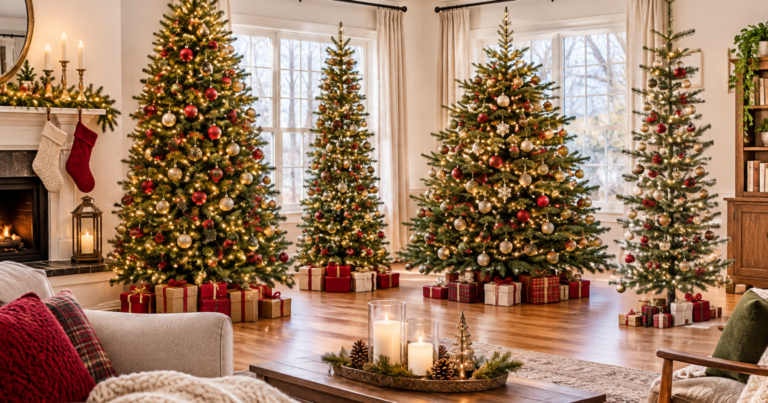
Use 90 to 120 ornaments if you want the tree to look finished from across the room without feeling crowded up close. This is the safest target for many 7.5-foot standard trees and works with classic red and gold, winter white, jewel tones, or family ornament mixes.
Full and photo-ready
Use 120 to 150 ornaments if you like a styled, abundant tree. Pair the ornaments with ribbon, picks, or florals carefully so the pre-lit branches still sparkle through. If you are using flocked branches, metallic finishes, velvet ribbon, or oversized bows, you may not need the upper end of the ornament range.
Layered and maximal
Use 150 to 180+ ornaments only if you genuinely want dense coverage and have a tree with enough width to handle it. The key is scale: large pieces deep inside the tree, medium pieces at mid-branch, and smaller ornaments near the outer tips. Without that layering, a high ornament count can look flat rather than luxurious.
A simple step-by-step buying method
Use this method before placing one big ornament order. It keeps the tree cohesive and helps you avoid the common mistake of buying too many identical pieces.
- Step 1: Identify the silhouette. Decide whether your tree is pencil, slim, standard, or extra-full. Use the shape ranges above as your starting point.
- Step 2: Pick the density. Choose minimal, balanced, full, or maximal. Do this before choosing colors so you are not tempted by every beautiful set.
- Step 3: Choose a main size. Let medium ornaments carry most of the tree, then add small fillers and larger statement pieces.
- Step 4: Count what you already own. Separate usable ornaments by color, finish, and size. Heirloom pieces count toward your total even if they do not match perfectly.
- Step 5: Buy in flexible groups. Instead of buying 120 ornaments in one finish, mix shatter-resistant basics, special decorative pieces, and a few sentimental ornaments.
- Step 6: Leave room for ribbon and picks. Wide ribbon, berry stems, florals, and oversized toppers all reduce how many ornaments the tree needs.
If you want a more complete decorating sequence, including ribbon placement and finishing layers, the step-by-step method in how to decorate a pre-lit Christmas tree pairs neatly with these ornament counts.
How to place ornaments so the count looks right
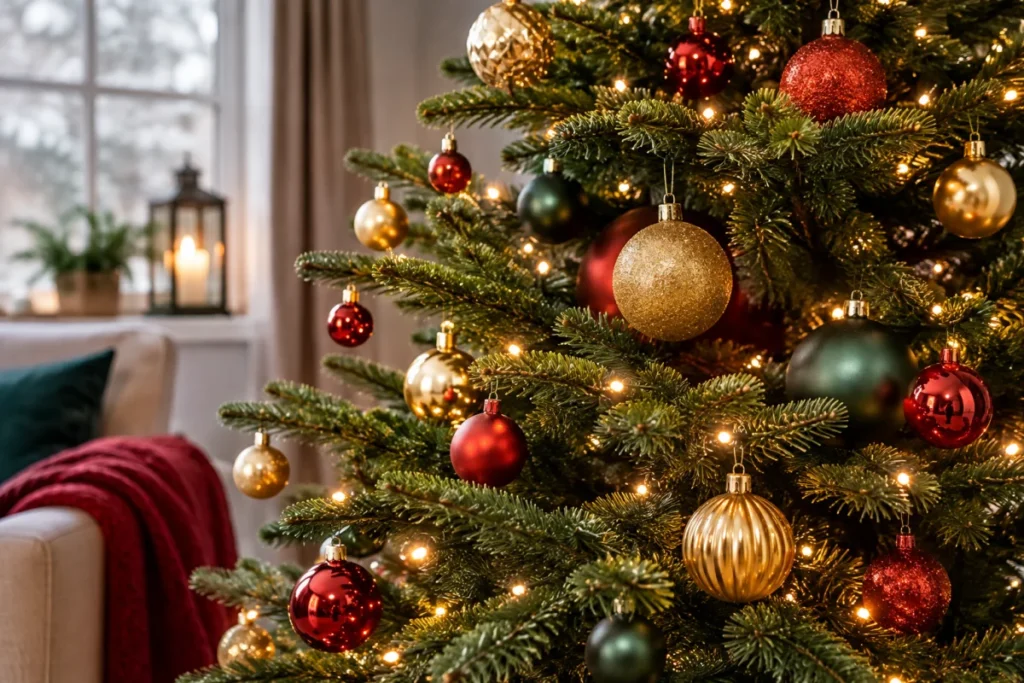
Even the perfect number can look wrong if all the ornaments sit on the outer branch tips. A 7.5-foot tree needs depth, especially when the lights are already woven through the branches.
- Start inside the tree. Place larger or less delicate ornaments deeper on sturdy interior branches to add dimension around the lights.
- Decorate in vertical zones. For a 120-ornament plan, use roughly 50 to 55 ornaments on the lower third, 40 to 45 on the middle, and 20 to 25 near the top.
- Work in triangles. Repeat each color or finish in loose triangle patterns so the eye moves around the tree naturally.
- Save the prettiest pieces for eye level. Sentimental ornaments and detailed designs belong where people will actually see them.
- Check the glow from across the room. If ornaments are blocking too many lights, remove a few shiny pieces from the outer tips and tuck them inward.
If the tree sits in a corner, you can decorate the back more lightly. Keep the visible front and sides full, but do not waste your best ornaments where the wall hides them. If the tree is visible from a hallway or window, stay closer to the full all-around count.
Common buying mistakes
- Buying only one size. A tree covered entirely in identical 3-inch balls can look flat, even when the color palette is pretty.
- Ignoring the tree’s width. Height gets attention, but diameter determines how many branches need dressing.
- Overfilling a slim tree. Pencil and slim trees look best when their vertical shape is respected, not hidden under bulky ornaments.
- Forgetting the built-in lights. Clear, color-changing, or multicolor lights already create movement. Choose ornaments that complement the light style instead of competing with it.
- Saving all large ornaments for the outside. Large pieces often look better set slightly inward, where they create depth without pulling branches down visually.
Questions people ask
How many ornaments do I need for a 7.5-foot pre-lit Christmas tree?
Most people need 90 to 120 ornaments for a balanced 7.5-foot pre-lit tree, assuming a standard-width shape and mostly medium ornaments. For a fuller designer look, plan on 120 to 150; for a slim tree, 60 to 90 is often enough.
Do pre-lit trees need fewer ornaments?
Not necessarily. The lights reduce the need for extra light strands, but they do not replace ornaments. What they do change is spacing: leave enough branch and light visible so the tree keeps its glow after the ornaments go on.
How many large ornaments should I use?
For a balanced 7.5-foot tree, use large ornaments as accents rather than the majority. Around 12 to 24 large pieces is usually plenty, depending on tree width, with medium and small ornaments filling the rest.
Should every branch have an ornament?
No. A polished tree needs rhythm, not complete coverage. Leaving some branch tips open helps the tree look dimensional and keeps the built-in lights visible.
The number that usually works
If you want the safest shopping target, buy or gather about 120 ornaments for a standard 7.5-foot pre-lit tree, then adjust up or down based on width and style. Go lower for slim silhouettes and minimal decorating; go higher for broad, full trees and layered ribbon-and-ornament looks.
The best tree is not the one with the most ornaments. It is the one where the lights sparkle through, the colors feel deliberate, and your favorite pieces still get their moment instead of disappearing into holiday clutter.