The lights are the first thing your tree says when the room goes dim. Before branch tips, ornaments, or ribbon do their work, the choice of color-changing vs warm white pre-lit trees sets the mood: nostalgic sparkle, candlelit calm, playful family energy, or a flexible mix of all three.
The right answer is not simply the brightest tree or the one with the most modes. It is the lighting style you will still like after the novelty wears off, the ornaments go on, and the tree becomes part of your living room for several weeks.
Main points before you choose
- Choose warm white if your room leans traditional, neutral, rustic, vintage, or elegant, and you want the tree to look settled rather than attention-grabbing.
- Choose multicolor if nostalgia, kids, playful ornaments, handmade decorations, or classic family Christmas energy matter more than a polished designer look.
- Choose color-changing if your household is split, your decor changes year to year, or you want one tree that can shift from quiet glow to party mode without adding separate light strands.
- Check the actual functions before buying. “Dual color,” “multicolor,” “clear,” “warm white,” and “smart” do not always mean the same thing across brands.
- Think about future annoyance. More settings can be delightful, but they can also mean more buttons, controllers, remotes, memory functions, or replacement questions later.
What each light style really means
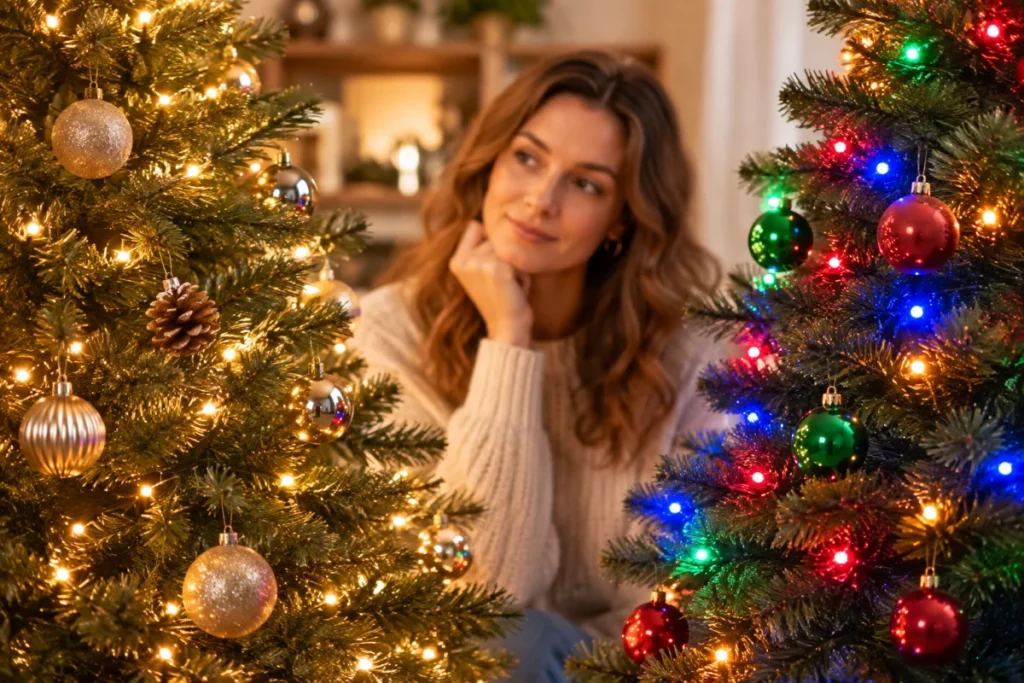
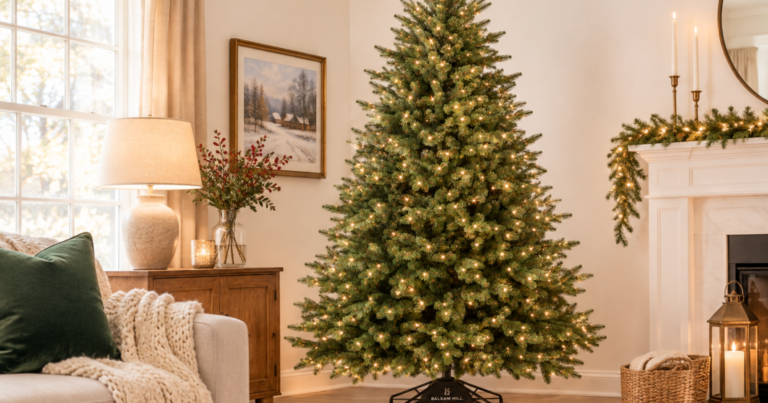
Warm white pre-lit trees use clear or warm-toned LEDs to create a soft golden or candlelike effect. They usually suit traditional ornaments, metallics, velvet ribbon, glass baubles, tartan, natural textures, and rooms where the tree is meant to feel calm and finished.
multicolor pre-lit trees use red, green, blue, and other colored lights for a brighter, more nostalgic look. They work especially well with family ornament collections, retro decorations, candy-colored themes, and trees that are allowed to feel joyful rather than curated within an inch of their piney lives.
Color-changing pre-lit trees are designed to offer more than one lighting look. Some switch between clear or warm white and multicolor. Others include additional lighting effects, depending on the model. A more tech-forward option such as the Twinkly Pre-lit Tree Multicolor + White 7 ft Type A is useful to compare if you are drawn to flexible light behavior, though you should always verify the exact controls and functions on the current listing before you buy.
Side-by-side: the style decision
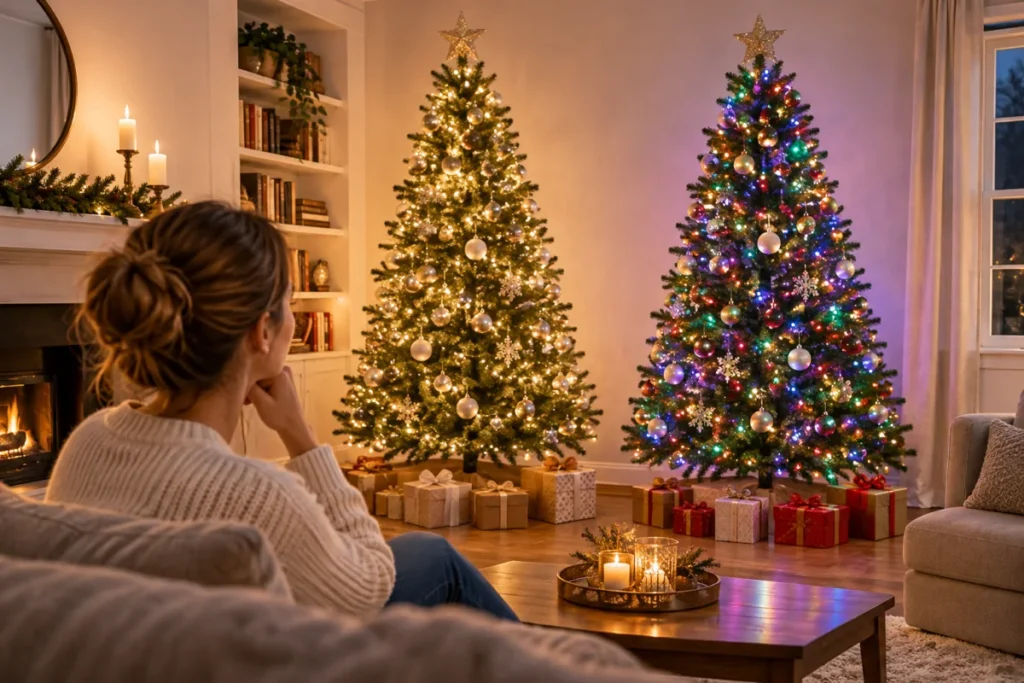
- Warm white: Best for refined, cozy, neutral, vintage, farmhouse, traditional, and lightly glamorous rooms. The tree blends more easily with wall color, furniture, mantel decor, and wrapped gifts.
- Multicolor: Best for nostalgic, casual, kid-friendly, maximalist, retro, and ornament-heavy trees. It brings instant personality, but it can compete with very strict color palettes.
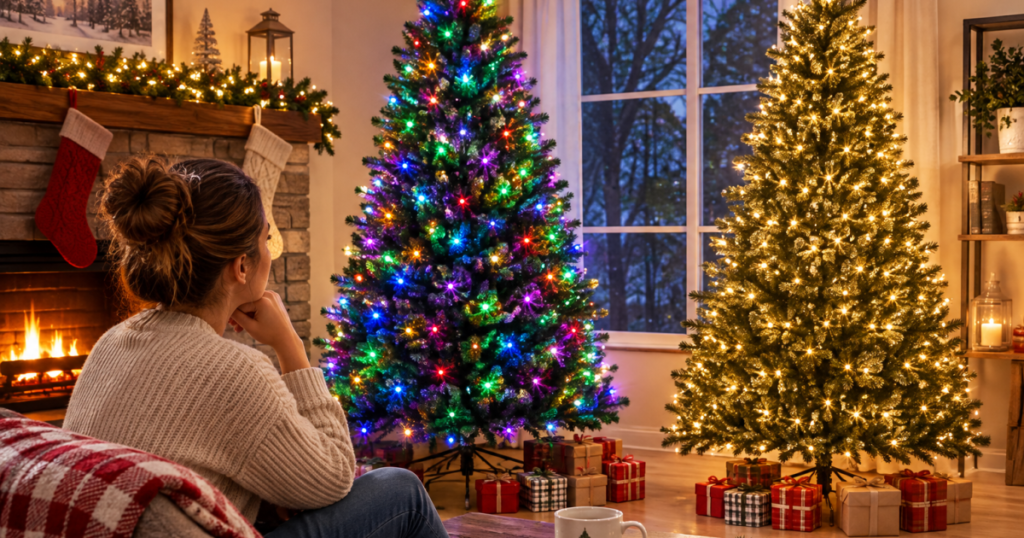
- Color-changing: Best for households that want options. It can be warm white for quiet evenings, multicolor for family decorating night, and sometimes more animated for gatherings if the model includes effects.
Editorially, warm white is the safest long-term style choice. It ages well, photographs easily, and rarely fights with ornament colors. Color-changing is the safer household-compromise choice. It reduces the chance that one person gets the elegant tree and another person mourns the loss of the cheerful one they grew up with.
When warm white is the better fit
Warm white lighting is strongest when the tree is part of a whole-room look. If you already think in terms of ribbon width, tree collar finish, mantel garland, and whether champagne ornaments are too yellow beside brushed gold, warm white is probably your lane.
It also helps slim and pencil trees look more intentional. A narrow tree can already feel visually vertical; steady warm light gives it polish without adding chaos. For a clear-light slim example, the Balsam Hill Silverado Slim 7 ft LED Clear Lights is the kind of tree to compare when the goal is a calmer glow in a tighter footprint.
Warm white is also forgiving if you decorate with fewer ornaments. The glow fills visual space without demanding a busy palette. A tree dressed with ivory ribbon, wood bead garland, mercury glass, brass bells, or burgundy velvet can look layered even when the ornament count is moderate.
Where warm white can disappoint
The trade-off is mood range. If your household loves candy canes, novelty ornaments, bright wrapping paper, and that “we found every decoration box in the attic” kind of Christmas, warm white can feel too quiet. It may also read a little formal in a playroom, family room, or casual den where the tree is meant to be the fun one.
When multicolor is the happier choice
Multicolor lights are less about restraint and more about memory. They make a tree feel instantly festive, even before ornaments. If your decorations include school crafts, souvenir ornaments, old family pieces, cartoon characters, or bold reds and greens, multicolor lights often make the whole mix feel deliberate instead of mismatched.
They also help a tree hold its own in a room with colorful stockings, patterned pillows, and piles of wrapped gifts. Warm white can disappear in a lively space; multicolor joins the party.
A traditional dual-color tree such as the National Tree Company 7.5 ft Pre-Lit Dunhill Fir Tree with PowerConnect Dual Color LED Lights is worth comparing if you like the idea of switching between clearer and more colorful looks, provided the current product details match the features you want.
Where multicolor can feel limiting
Multicolor lights make a strong visual commitment. If you later decide on an all-white, woodland, champagne-and-silver, or moody jewel-tone tree, the built-in color mix may pull attention away from the ornaments. You can still create a beautiful tree, but the lights will lead the story.
Why color-changing trees solve one problem and create another
The appeal of a color-changing tree is obvious: one tree, multiple moods. You can keep things warm and quiet for everyday evenings, then switch to multicolor for Christmas morning, movie night, or when kids lobby for “the fun lights” with the courtroom confidence of tiny holiday attorneys.
That flexibility is genuinely useful if your decorating style changes. Maybe this year is velvet ribbon and glass ornaments, while next year is peppermint stripes and handmade paper chains. A tree that changes light color gives you more room to evolve without replacing the entire centerpiece.
The complication is ownership friction. More functions can mean more settings to cycle through, more dependence on a controller or remote, and more need to understand how replacement parts work for that model. None of that is a reason to avoid color-changing lights, but it is a reason to avoid buying purely because the listing sounds impressive.
If you choose this route, read the light description closely. Look for whether the tree offers warm white, clear white, multicolor, steady modes, fading, twinkling, or other effects. These terms vary, and the difference matters when you are trying to create a specific room mood.
Match the lights to your ornaments
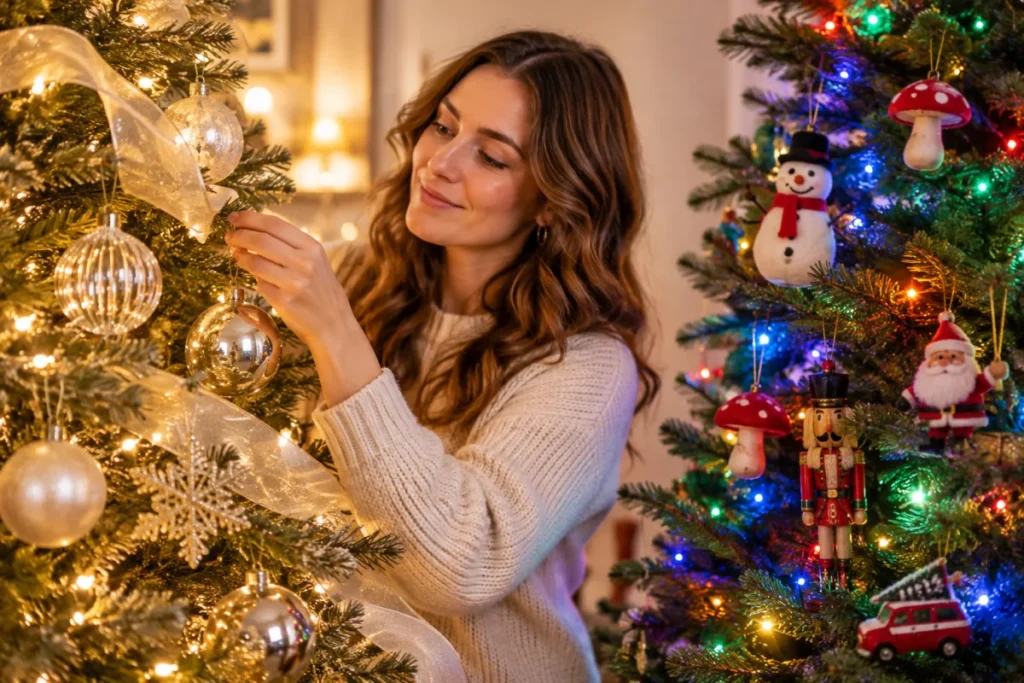
Tree lights and ornaments should not compete for the same job. Lights create the atmosphere; ornaments create the story. When both are loud, the result can be cheerful or chaotic depending on the room and your tolerance for sparkle.
- Glass, metallic, pearl, velvet, and ribbon-heavy trees: Warm white usually flatters these materials and keeps the finish elegant.
- Handmade, collected, character, travel, and childhood ornaments: Multicolor lights often make the variety feel warmer and more intentional.
- Minimal ornaments or Scandinavian-inspired decor: Warm white is usually easier to style because the negative space feels deliberate.
- Theme changes from year to year: Color-changing lights give you the most flexibility, especially if your ornament palette is not fixed.
- Flocked trees: Warm white tends to enhance the snowy look, while multicolor creates a more playful, vintage effect. A flocked option such as the King of Christmas Prince Flock Tree is a useful reference point when thinking about how snow finish and light color interact.
Brightness matters as much as color
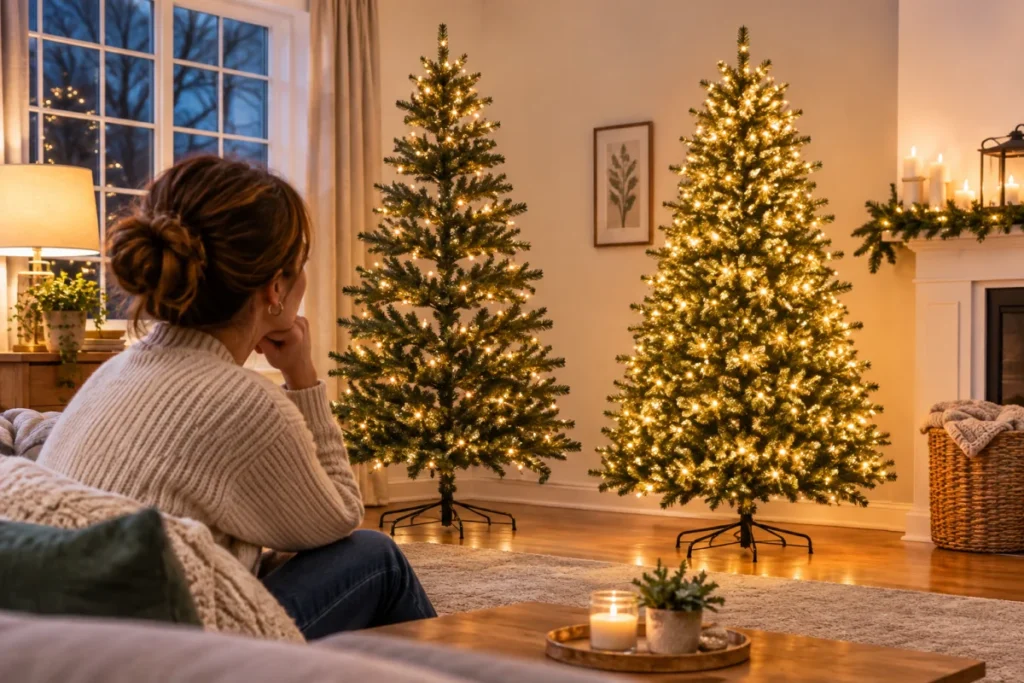
A warm white tree with too few lights can look dim, while a multicolor tree with dense lighting can dominate a small room. Before you fall for a light color, check the light count, tree height, and branch fullness together.
A 7.5-foot tree in a main living room usually needs a different glow than a 5.5-foot tree in a bedroom corner. Slim trees concentrate light in a narrower shape, while full trees spread it across more branch depth. If you are comparing listings and wondering whether a number sounds generous or sparse, use our guide to how many lights to look for on a pre-lit Christmas tree as a reality check before you commit.
Replacement and repair considerations
Pre-lit convenience is wonderful until a section goes dark. With any pre-lit tree, replacement ease depends on the light system, how the wiring is integrated, and what parts the manufacturer or retailer supports. Do not assume every bulb, strand, remote, or controller is easy to replace years later.
Warm white and single-color trees can be simpler to understand because there are fewer lighting behaviors involved. color-changing trees may use more specialized controls, especially if they include multiple effects. That does not make them a bad choice; it simply means you should save the manual, keep the controller in a labeled storage bag, and verify replacement options before the return window disappears.
One practical habit: photograph the plug, control box, and label information when the tree is new. Future-you, standing barefoot beside a half-lit tree in December, will appreciate this small act of mercy.
Regret risk: which choice is safest?
Warm white has the lowest style-regret risk for adults who want a tree to blend with the room. It works across traditional, transitional, modern, rustic, and softly glamorous decor. If you are buying a higher-end tree and want it to remain useful through several decorating phases, warm white is the steady choice.
Multicolor has the lowest emotional-regret risk for families who associate Christmas with bold, cheerful lights. If colored lights are part of the tradition, skipping them for a more restrained tree can feel oddly flat once the season arrives.
Color-changing has the lowest household-disagreement risk. It is the diplomatic option: warm white for the person who wants calm, multicolor for the person who wants joy turned up a notch. The trade-off is that you need to be comfortable with the extra controls and possible model-specific replacement questions.
Key questions answered
Should I buy warm white, multicolor, or color-changing?
Buy warm white if you want a timeless, decor-friendly tree. Buy multicolor if your tree is about nostalgia, family ornaments, and playful energy. Buy color-changing if you want both looks in one tree and do not mind checking the exact lighting functions before purchase.
Are clear lights and warm white lights the same?
Not always. Retailers may use “clear,” “white,” and “warm white” differently. Clear lights often refer to white-looking lights rather than colored bulbs, while warm white usually suggests a softer golden tone. Always look at product photos, descriptions, and customer images where available.
Do color-changing trees look less elegant?
Not necessarily. Many can look elegant when set to a warm or clear mode. The elegance depends on the light tone, branch fullness, ornament palette, and whether the effects are used with restraint. A tree does not have to perform a light show every Tuesday.
Which light color is best for a small room?
Warm white is usually easier in a small room because it feels softer and less visually busy. Multicolor can still work beautifully, especially on a slim tree, but keep the ornament palette simpler so the tree does not overwhelm the corner.
Practical takeaway
If you are choosing with your head, warm white is the most versatile long-term pick. It is calm, style-aware, and easy to decorate around. If you are choosing with your heart, multicolor may be the tree that actually feels like Christmas. If your household wants both, a color-changing tree is the most flexible compromise, as long as you verify the modes, controls, and replacement support before buying.
The best pre-lit tree is not the one with the flashiest feature list. It is the one whose glow still feels right after the ornaments are on, the room lights are low, and everyone has stopped thinking about specifications long enough to enjoy the season.